
Finding Faithful Leaders Throughout the World and Throughout History as Representations of their Power of Faith by Shannon Preto, YED

Every month within the Youth and Family Ministries program at the Unity Center of Peace, we study one of the 12 Powers. In January, we looked at the Power of Faith, which is the “Power of Perception, Conviction, and Expectancy” (from Divine Audacity by Linda Martella-Whitesett). The lessons often started out with the children breaking some kind of bread, e.g., Hawaiian sweet bread, pita, gluten free baguettes, biscuits, tortilla, etc. Breaking bread, or having a meal together, is a symbol of our family as a community. We eat together and share in our words of wisdom that we have heard from our friends, our parents, a teacher, or someone else.
Throughout the month of January 2026, the YFM program has been looking at different Faith Leaders, and they have used this as their medium for expressing their Power of Faith. Each week we have learned about three Leaders, which means the children were briefly introduced to who each leader was, or is, and how they enacted their Faith. Three people can be a lot to get across, particularly if that person is famous, unknown, or offers a big concept to unpack. So at the YFM program we have decided to write this blog to provide a resource for the children and their parents to those we have studied. Some of them are global leaders. Some of them are personal to the YFM director and the YFM assistant. Much of this information has been pulled from the Internet and should be used as directional signage towards deepening you and your children's knowledge. We encourage you to dive deeper into a Faith Leader as the process of studying them can lead you deeper into your own Power of Faith.
A note about the videos linked here. We often watched the first minute or two as a way to introduce the leader. After the video was shown, the teachers lectured on why this video was chosen. Additionally, much of the information and pictures were pulled from Wikipedia. And though Wikipedia may not be the most scholarly resourced reference, it provides succinct introduction to many topics.
Week 1: Jesus, Unity Leader & Buddha: beginning the journey inward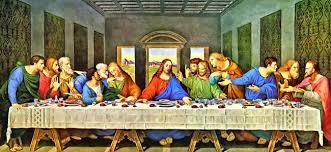
Why: Jesus and the Last Supper was chosen for a few reasons. First, the Unity Church utilizes some aspects of Christianity (see below), of which Jesus is often centered. Additionally, Christianity is a large portion of the culture within the United States, and it is wise to know a little bit about this Faith Leader. The Last Supper was introduced as it depicts breaking bread together. Breaking bread is both a religious activity and a secular activity, and, in both ‘places’, the Power of Faith can be fully present. Every Sunday in January the children and the adult leaders broke bread, e.g., gluten free loaf, pita, and Hawai’ian sweet bread. While eating together, we also talked about how many other faith traditions also break bread.
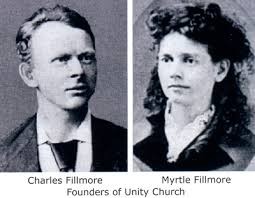
In this first week, we introduced the children to the founders of the Unity movement, Myrtle and Charles Fillmore. Unity is a spiritual organization founded by Charles and Myrtle Fillmore in 1889. It grew out of Transcendentalism and became part of the New Thought movement.[1] (wikipedia). Myrtle Fillmore was raised as a strict Methodist despite its strict teachings. Additionally, she sought out many doctors and medications to cure her numerous medical ailments. “She “awoke” to a spiritual self-healing, which she credited for improving her health and recovering from chronic tuberculosis.” “Charles Fillmore was known as an avid reader and studied many of the world’s religions. Both Myrtle and Charles were influenced by Dr. E. B. Weeks, Ralph Waldo Emerson, Emma Curtis Hopkins and Mary Baker Eddy (the founder of Christian Science).” Through their study, their personal experiences, and through rigorous discernment, they started organizing what would become the Unity church.
What is New Thought
“The New Thought movement (also Higher Thought)[1] is a new religious movement that coalesced in the United States in the early 19th century. New Thought was seen by its adherents as succeeding "ancient thought", accumulated wisdom and philosophy from a variety of origins, such as Ancient Greek, Roman, Egyptian, Chinese, Taoist, Hindu, and Buddhist cultures[citation needed] and their related belief systems, primarily regarding the interaction among thought, belief, consciousness in the human mind, and the effects of these within and beyond the human mind.” (wikipedia)
Why: Myrtle and Charles Fillmore were the founders of the Unity Movement, and it is important for the children to learn the history of the Unity movement.
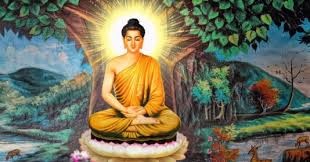
Buddha was born in Nepal and died in India. “He was the founder of Buddhism, one of the major religions and philosophical systems of southern and eastern Asia and of the world. He famously sat in meditation under a Ficus religiosa tree—now called the Bodhi Tree—in the town of Bodh Gaya and attained "Awakening" (Bodhi).[60]” ….upon awakening, the Buddha gained insight into the workings of karma and his former lives, as well as achieving the ending of the mental defilements (asavas), the ending of suffering, and the end of rebirth in saṃsāra.[59]“ Through this enlightenment, Four Noble truths were realized, and pathway towards enlightenment.
Four Noble Truths
- dukkha - That we “suffer” from wants, needs, negative thoughts, etc.
- samudaya - That we “suffer” because we believe we really need that, want that, that we expect” something to happen.
- nirodha - That we can find happiness by letting go of what we think we want, need or expect.
- marga (path) - That there is a pathway towards happiness.
- Right Viewpoints - or seeing things as they are
- Right Values - choosing intentionally with compassion
- Right Speech - that we speak with kindness
- Right Actions - that we can help others.
- Right Livelihood - that we can choose
- Right Effort - try again and again.
- Right Mindfulness - knowing what you are thinking about.
- Right Meditation - Practice, practice, practice
We hope that some of this information settled into your children’s minds and bodies and spirits.
Here is a video of Thich Nhat Hanh talking about the Four Noble Truths: https://youtu.be/dy-RI3FrdGA?si=m_fB-jg2sc2pWFky
Why: Buddha and Buddhism was included as one of the influences for Charles and Myrtle Fillmore and it is one of the influences for the YFM Director, Shannon Preto. It also seemed topical with the news story of the Buddhist monks walking across the United States currently.
Week 2: Cole Arthur Riley, Bonnie Bainbridge Cohen, & Bob Ross: a personal Faith leader leads us towards higher spiritual acceptance of Self.
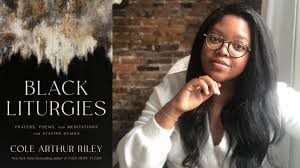
Cole Arthur Riley is, more than most things, a writer. Born and for the most part raised in Pittsburgh, Cole studied writing at the University of Pittsburgh, but traces her love of words back to her father, who would bribe her and her siblings to write poems and stories to get out of chores, or for cold hard cash; and her gramma who was part writer, part sage.
From This Here Flesh; “From the womb, we must repeat with regularity that to love ourselves is to survive. I believe that is what my father wanted for me and knew I would so desperately need: a tool for survival, the truth of my dignity named like a mercy new each morning.”
Cole is also the creator of Black Liturgies, a space that integrates spiritual practice with Black emotion, Black literature, and the Black body; and a project of The Center for Dignity and Contemplation where she serves as Curator.
Some thinkers who have formed her include, Audre Lorde, Octavia Butler, James Baldwin, Thomas Merton, Toni Morrison, Maya Angelou, Dietrich Bonhoeffer, and Julian of Norwich.
Black Liturgies beginnings
https://youtube.com/shorts/TrTEYd8qon0?si=qaziM2SNpJXcPQSj
Why: Cole Arthur Riley was selected as she is a contemporary Faith leader forging a more inclusive spirituality. Her movement is an example of how a spirituality is being shaped in our current times.

Bonnie Bainbridge Cohen
“The mind is like the wind and the body is like the sand: if you want to know how the wind is blowing, you can look at the sand.” - BONNIE BAINBRIDGE COHEN
Initiating Breath by Feeling Gravity through Your Feet
(just the first minute or so)
Why: Ms. Bainbridge Cohen was selected because Shannon, the YFM director, was heavily influenced by her teaching the centering, or integrating, of the body and mind. And it can be that through a centering of body with mind, and mind with body, that a higher spiritual interconnectedness can introduced. That one’s individual body/mind is connected to another person’s body/mind and that there may be a body/mind bigger than ‘us’.
Video used in the classroom to introduce Ms. Bainbridge Cohen’s work: https://youtu.be/Ea__zEp1iNQ?si=ZpA6QTShGujwRyYb

Bob Ross was an American painter, television host, and art instructor best known for The Joy of Painting. With his calm voice, gentle humor, and unmistakable afro, he made art feel accessible to everyone. Bob Ross didn’t just teach people how to paint landscapes—he taught them how to be patient with themselves. He believed there were no mistakes, only “happy little accidents,” and that creativity was something anyone could tap into if they gave themselves permission to try.
(written by YFM assistant, Kai Kaisen) Artistically, Bob Ross has influenced me by removing fear from the creative process. He showed me that art doesn’t need to be perfect to be meaningful, and that the act of creating can be just as important as the final result. His approach encourages exploration, softness, and trust in instinct rather than control.
“Anything you are willing to practice you can do” can suggest conviction to keep going to reach your expectations.
Video of his quote: https://youtu.be/I-JmapjsylU?si=DbyZAH4lq0OFu_Ci
“Waiting on the Good Times” can suggest that Dark and Light are intertwined.
Video of his quote: https://youtu.be/ZTMxjADudbc?si=3Q2sc7v-i7LLPRKH
Why: Spiritually, Bob Ross represents peace, presence, and self-belief. His words felt meditative, grounding, and quietly empowering. My favorite quote of his—“The secret to doing anything, is believing you can do it”—reminds me that confidence is a practice, not a prerequisite. Through his kindness and philosophy, Bob Ross has guided me toward creating with patience, compassion, and faith in myself.
Week 3: Martin Luther King Jr., Mahatma Ghandi, Gustavo Gutiérrez & Amma: leaders who centered others in the Faith Movement
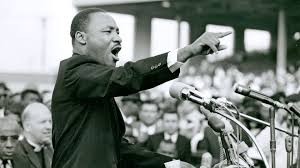
In January, the United States, we honor the life and legacy of Dr. Martin Luther King Jr. He continues to be taught in the public schools. It was reasoned that talking about the beginning of how Dr. King started out, why he started becoming an activist, and how he centered the rights of Black People in his faith movement. Therefore we talked about the Montgomery Improvement Association. “The Montgomery Improvement Association (MIA) was an organization formed on December 5, 1955 by black ministers and community leaders in Montgomery, Alabama. Under the leadership of Ralph Abernathy, Martin Luther King Jr. and Edgar Nixon, the MIA was instrumental in guiding the Montgomery bus boycott by setting up the car pool system that would sustain the boycott, negotiating settlements with Montgomery city officials, and teaching nonviolence classes to prepare the African American community to integrate the buses.” … [The MIA] lead” a campaign that focused national attention on racial segregation in the South, to be successful and catapulted King into the national spotlight.[1][2]”
Video explaining what the Montgomery Improvement Association: https://youtu.be/GM35Km6uyY8?si=Q-3S93b3bwGjtN1S
Why: It seemed important to include MLK Jr into our children’s spiritual development within the Unity Center of Peace. Additionally, an interesting question was posed about why MLK was the MIA leader who was elevated above the others. What was it about MLK’s perceptibly, conviction, and Faithful expectation for a better world?
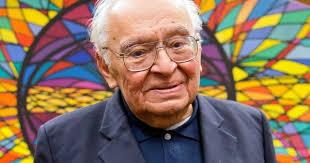
Gustavo Gutiérrez was “a Peruvian priest and theologian considered the father of liberation theology; his 1971 book, A Theology of Liberation, is foundational. His theological focus connected salvation and liberation through the preferential option for the poor, with an emphasis on improving the material conditions of the impoverished. Gutiérrez proposed that revelation and eschatology have been excessively idealized at the expense of efforts to bring about the Kingdom of God on Earth.[7] His methodology was often critical of the social and economic injustice he believed to be responsible for poverty in Latin America, and of the Catholic clergy. The central pastoral question of his work was: "How do we convey to the poor that God loves them?"[8]”
Video talking about the Liberation Theology: https://youtu.be/hZo4LdWrmcI?si=Gl_5K98OUYbtwRqU
Why: Fr. Gutiérrez was included to include more global perspectives outside the US as well as to convey that a theology can center those living in poverty. And that maybe by centering people who poor, a greater social and religious wholeness can be realized.
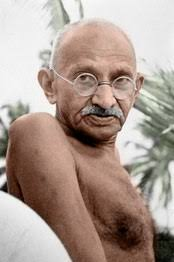
Mahatma Gandhi “...was an Indian lawyer, anti-colonial nationalist, and political ethicist who employed nonviolent resistance to lead the successful campaign for India's independence from British rule. He inspired movements for civil rights and freedom across the world.” … “Assuming leadership of the Indian National Congress in 1921, Gandhi led nationwide campaigns for easing poverty, expanding women's rights, building religious and ethnic amity, ending untouchability, and, above all, achieving swaraj or self-rule.”
Video talking about who Mahatma Gandhi’s life: https://youtu.be/9goGhe31YJY?si=MCifJPzCQrf77Jjt
Why: Mahatma Gandhi was included as a model for centering a country against the oppression of colonialism in his Faith movement. Additionally, Mr. Gandhi is a historical figure that might be important for the children to know.
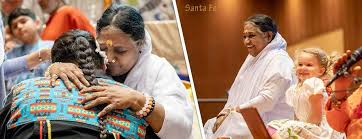
Sri Mātā Amritānandamayī Devi often known as Amma ("Mother"), is an Indian Hindu spiritual leader, godwoman,[1] guru and humanitarian.[2][3] Born to a Arayan fishing family, who is subcaste of Dheevara (disadvantaged community) on 27 September 1953, she was the third child of Sugunanandan and Damayanti. Amṛtānandamayī's form of giving darshana is hugging people.[14] As to how this began, Amṛtānandamayī said, "People used to come and tell [me] their troubles. They would cry and I would wipe their tears. When they fell weeping into my lap, I used to hug them. Then the next person too wanted it... And so the habit picked up."[15] Amṛtānandamayī has embraced more than 33 million people throughout the world for over 30 years.[14]” Darshana is described as an "auspicious sight" of a holy person, which bestows merit on the viewer.[2] ”
LA Times video: https://youtu.be/0Y8qF7YPnNU?si=gI95KxUr_lFuH2Nj
Why: Amma was included because of how she centers touch in her Faith movement. The YFM direct has heard anecdotal evidence of the spiritual transformation of simply being hugged by an important Faith leader.
Week 4: Desmond Tutu, Waangari Mathai, & the Toyi Toyi: entering liberation in their Faith movements
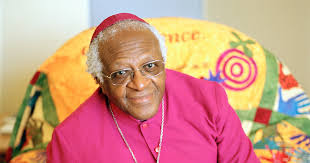
Rev Bishop Desmond Tutu was a South African Anglican bishop, theologian, and advocate. He is known internationally for his work within the anti-apartheid movement and as a human rights advocate. He received the Nobel Peace Prize in 1984. He was the Bishop of Johannesburg from 1985-1986. Then became Archbishop of Cape Town from 1986 to 1996. The history of the Anglican Church in South Africa can be found HERE. It is an interesting and torrid history when looked at through the lens of British Colonialism. Theologically, he sought to fuse ideas from Black theology with African theology.
Video link to YouTube talking very briefly about his life: https://youtu.be/VzramerifVM?si=neaCqzgR9iEWlQS_
Why: He was a religious figure who also became a Faith leader for the anti-apartheid movement. Many Nobel Prize winners have a religious or secular Power of Faith driving them. Then as I learned more about how the worldwide Anglican Communion functioned more as a committee rather than the papal hierarchy in the Roman Catholic church, my appreciation of Rev. Bishop Desmond Tutu has deepened. There have been lots of allowances, compromises and fractures the Communion has made throughout its history.
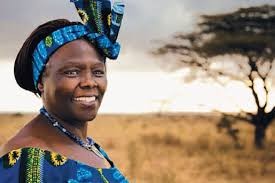
Wangarĩ Maathai was a Kenyan social, environmental, and political activist who founded the Green Belt Movement,[2][3] an environmental non-governmental organization focused on planting trees, environmental conservation, and women's rights. In 2004 she became the first African woman to win the Nobel Peace Prize.[4]
…Maathai became the coordinator. Along with the partnership with the Norwegian Forestry Society, the movement had also received "seed money" from the United Nations Voluntary Fund for Women. These funds allowed for the expansion of the movement, for hiring additional employees to oversee the operations, and for continuing to pay a small stipend to the women who planted seedlings throughout the country. It allowed her to refine the operations of the movement, paying a small stipend to the women's husbands and sons who were literate and able to keep accurate records of seedlings planted.[46]
[I copied and pasted this information directly from Wikipedia.]
Inspirational video: https://youtu.be/IGMW6YWjMxw?si=KZLJ98lQbxUTcGG4
Why: I remember hearing about her on the news. I included her here, because many of our children have stated that Nature is central to their Faith. I remember her being assertive in planting trees in Kenya despite the patriarchy. Her work of reforesting the land changed the land back into fertile soil. Through her work she lifted up nature and lifted up Kenyan women in an environment that has withered both of these holy beings.
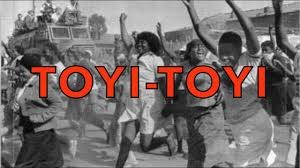
Toyi Toyi was often used for intimidating the South African police and security forces during anti-apartheid demonstrations. The toyi-toyi was also used with chants such as the African National Congress's "Amandla" ("power") and "Awethu" ("ours") or the Pan African Congress's "One Settler, One Bullet". After the 1976 Soweto massacre, the anti-apartheid movement became more militant. The toyi-toyi, a military march dance and song style, became commonplace in massive street demonstrations. As one activist puts it, "The toyi-toyi was our weapon. We did not have the technology of warfare, the tear gas and tanks, but we had this weapon."[2]
Current use in South Africa
After Apartheid ended, people have used toyi-toyi to express their grievances against current government policies. Use of the dance has become very popular during service delivery protests and among trade unions.[3][4]
[Again, I cut and pasted this information from Wikipedia]
A clip from the movie Sarafina off of YouTube ( https://youtu.be/tcOJrUR58PE?si=Ckgq6DoFM1PLqPK6). Here is a synopsis of the movie on IMBD (https://www.imdb.com/title/tt0105316/)
It seems you can watch the movie on PlutoTV for free. It stars Whoopi Goldberg!
Why: I remember feeling heavily impacted by the force or Toyi Toyi as I saw clips of it on the news during my undergraduate years; I graduated from Kent State University in 1996 with a Bachelor’s in Dance. Witnessing the masses dancing down the street in protest was inspirational and uplifting. That the power of dancing and singing could raise up the anti-apartheid movement (and the people’s hope) as well as provide a force to be reckoned with by the government was amazing to behold. When people danced the Toyi Toyi, they centered their collective bodies in their Faith movement.
When you subscribe to the blog, we will send you an e-mail when there are new updates on the site so you wouldn't miss them.


Comments